Life After College Deserves a Cupcake...and So Do You

Now thats what I call FROSTING!! (Photo courtesy of Flickr) Last week Ryan Stephens published his list of Top 10 Gen Y blogs. You - readers, friends, fellow bloggers - voted me #6. Number Six!!! I was jumping up and down like a school girl when I saw that. I would have been excited about an honorable mention. Heck, I was excited to be on the ballot in the first place. I called my parents and friends as if I had one the lottery.

More than ever and long overdue, I am compelled to express out loud the gratitude I feel every day.

Thank you.

Thank you to those of you who subscribe via email. Every time I see your name on my subscriber list, I smile and send you lots of happy thoughts.

Thank you to those who read in a feed reader - even though I do not know exactly who you are, I know you are out there! I'm honored to be among your (ever-expanding, I'm sure) list of blogs worth reading.

To those reading this blog for the first time - today, right now - welcome, and I look forward to getting to know you better!

Thanks for your insightful comments and your emails. Every one is like a little present in my inbox.

A special note to everyone on Twitter - you make every day exciting. You never cease to fill it with connection, humor, intelligence and resources. I hope I am able to do the same for you. I am always so thankful for all of the @replies, conversations, re-tweets and the #followfridays. Non-Twitter folk, have I lost you yet? If so, read why I think you should join the fun!

Thank you to those who have joined me and Jamie on one of our crazy cupcake tweet-ups, and to those who haven't - either head out to SF or hopefully we will soon be at a city near you! (Read a great write-up of our most recent cupcake tweet-up by BrokeGradStudent.com)

Even before the Top 10 Gen Y Blogs nod, this post was inspired by a similar one at David Cain's blog Raptitude. Thanks David, for your compelling writing and for such a sincere note to your readers. After reading it, I really felt I couldn't have said it better myself.

This blog is my playground. A fun, energizing place that is helping me "live the dream" of creating value, sharing it, and (hopefully) making people's lives better one little step at a time. Thank you for being great readers and great friends.

The Truth About Potential: Guest Post by Carlos Miceli

This is a guest post by Carlos Miceli. He is a young Argentinian that likes to question everything.

Editor's Note: Carlos is one of the most charming, friendly, intelligent and engaging people I have met on Twitter, and English isn't even his first language! I am thrilled to share his work on my blog.

girl

"We judge ourselves by what we feel capable of doing, while others judge us by what we have already done." -Henry Wadsworth Longfellow

What do people mean when they say that someone "has potential"? What do they see in someone when they say that person will "get far," whatever that means? Is it about having innate and undeniable abilities, like intelligence and charisma, that make an impact? Or is it about people betting on and predicting your future based on superficial first impressions?

The thing about potential is that it is never precise. Bosses, friends and acquaintances see people with potential as having "a bright future," but it is often based more on gut instinct than anything else. Because there is no way to be sure - to know exactly how good a person will be, or what life decisions he or she will make. No way of telling how much of their potential will be fulfilled.

When you think about getting places, it is not potential that matters. It is capacity. It is your capacity that will give you results if you put it to work. But other people don't always know what you are capable of, so they assign you a predicted level of "potential." And until they really get to know you, the level of potential they see in you is a guessing game.

You have more control over other people's impressions of your potential than you think. Why does it matter? Because if they think you have potential, they will support you. They will mentor you, fight for you, and give you opportunities.

I'm sure you've heard the phrase, "fake it until you make it." No matter what your capacity or level of experience is, if you can show potential, doors will start opening for you.

So how do you show potential? By standing out, being different. Sound hard? I'll go out on a limb and say it's actually easy. Really easy. These are my personal tips:

  • Be inquisitive. Ask questions. Lots of them. This is "Standing Out 101" since most people don't do this. Asking means "I don't know everything, but I want to." It shows ambition, which helps demonstrate your potential. Some people will be happy to answer your questions, and will be glad to have met you and supported you. Others will be resentful; they are the ones who you will probably leave behind faster.
  • Be controversial, wisely. When you think differently about something that everyone else agrees with, take a risk and speak up! Be open and leave room for being wrong, but be vocal too. Being willing to speak up when you are the odd-one-out is a huge step towards showing potential, because it forces people to notice you, to listen to you. But be ready to lose the argument; remember, it's not about being right, it's about standing out.
  • Be confident! Stand up for your uniqueness. For people to bet on you, they must believe in you. And they won't if you don't believe in yourself. Being confident is another way of saying "I'm a sure bet."
  • Be a rockstar. Go above and beyond what is asked of you. Be an essential part of the team. But don't try to be the PERFECT employee, because being perfect means fitting in perfectly. You can't stand out without having an edge. Putting yourself out there. Doing things differently.
  • Be unique. It's not up to me to define what is unique or not. Maybe writing poetry, maybe dancing salsa, maybe having a blog. Having a life outside of your mainstream activities will make people ask questions about you, therefore creating the mystery that makes you stand out. Potential is all about making people wonder about you, in a good way.

When you are alone, thinking about succeeding in life, always remind yourself that you have to give your best, that you CAN get where you want to, and that you are the master of your life. But when it comes to potential and people's opinions of you, market yourself accordingly. "Godinize yourself." Live on the edges. Be weird. Because being weird kicks ass.

Busting the Work-Life Balance Myth

This post corresponds to a 40-minute recorded teleseminar. To skip the background and jump straight to the call notes, click here. I recently did another promotional call with my good friend Jenny Ferry for the iThrive Experience workshop for women in Scottsdale, Arizona this Saturday. I'm really excited about the workshop - I will be giving a one-hour talk on personal finance called "How to Demystify and Gain Control of Your  Money." I'm in great company with a handful of experts who are also speaking at the event, including Pam Slim, author of Escape from Cubicle Nation. If you have a female friend in Arizona, we'd be incredibly grateful if you sent her this link - it's not too late to sign up, and the event is a steal at only $59!

For the last few months, Jenny has been hosting conversation-style calls about various topics with speakers from the workshop. You may remember my previous guest spot, "How to Rock Your Personal Finances." Our last call was "Work-Life Challenge: Stop Forcing Balance and Find Your Flow" - a topic I'm sure many of you can relate to. I actually laughed out loud when Jenny asked if I thought this would be a good topic. ME?! Work-Life Challenged?! BAH. The reality: this topic is near-and-dear to my heart, given that I am juggling a full-time job with what (gratefully) feels like a full-time blog, trying to also make time for friends, family, relaxation and all the other things that make up a full, rich life.

You can listen to the call (approximately 40 minutes) by (or right-click to download). Note: the first minute and a half is chit-chat which you may want to skip! I have included a high-level outline of the call below and a fully transcribed version in a Google Doc.


Work-Life Challenge: Stop Forcing Balance and Find Your Flow - High-Level Outline

1:28-10:00 - Introductions, Background on our Perspectives

10:00 - Myths About Work/Life Balance

  • That "life" starts as soon as we leave the office.
  • That there is an ethereal scale hanging in the sky, and the sides will perfectly balance.
  • The myth that once you figure things out, life will stay balanced (when in reality there is no "there" where you have achieved total balance forever).
  • That we have total control over how big the various pieces of our life "pie" are at any given time.
  • That being unbalanced is always a bad thing (sometimes you need things to be unbalanced so you can really go after what you want).
  • That you will finish your to-do list and it will be done forever. There will always be things do to - don't let the list control your life.

16:00 - Fresh Perspectives on the Work/Life Challenge

  • It is all about flow - don't beat yourself up when things get out of balance, just notice and adjust.
  • Be okay with where you are in the moment, try not to carry guilt about the things you didn't get done.
  • Acknowledge that work is a huge part of our lives, not something to run away from; it brings confidence, sense of accomplishment and social interaction with others.
  • Try taking a moment-to-moment perspective. Ask yourself, "What do I need right now?"
  • Let go of the notion that "I'm supposed to have it all YESTERDAY" (the great job, the great house, the great relationship, the great bank account).
  • Relax a little bit, release some of the need for control, lift the oars!
  • Realize that we cook up so much of what we "should" be doing in our own mind - for most of us there is not a real person cracking a whip telling us what to do, saying "get everything on your to-do list done!" We put a lot of pressure on ourselves, and sometimes we create more stress than we need to.
  • Take a birds-eye view, bigger picture agenda for your life.
  • Try to create balance within each day. Exercise, call a friend, go to work, do something restful. Rinse and repeat.

22:30 - Practical Tips: What Else Makes this Manageable for the Two of Us?

  • Jenny Blake
    • UNPLUG! With Twitter and Facebook and blogging and email it all spills together, and it all centers around my computer and my cell phone. Sometimes balance comes from prying myself away from my electronics to go be outside or do something fun.
    • Exercise in the morning, yoga at night helps me to unwind and transition to a different state of mind.
    • Make a point to relax, schedule time with friends, have fun - hang out with funny people!
    • Journal - helps me be more aware of where I am satisfied and where I am wanting more.
    • Kick myself out of the "I'll start tomorrow" mentality about things that are making me unhappy.
    • Awareness. When I'm not happy, I try to get clear on why and what might move the situation forward.
    • When I am stressed, I pick the three most important things on my list and just focus on those.
    • Block out time to reflect, slow down with things like workshops, coaching, journaling, etc.
    • Laugh! Remember that 9 times out of 10 I make things a bigger deal than they need to be.
  • Jenny Ferry
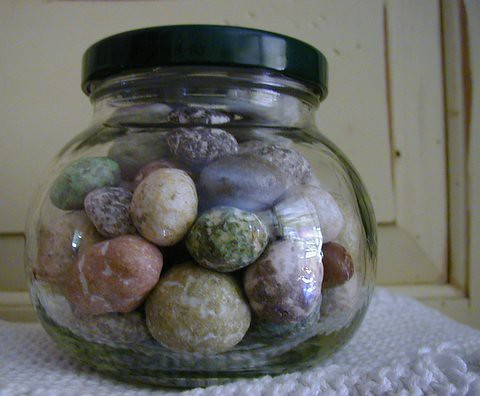
    • Mix it up. Create a set of structures that serve as reminders.  Example: a red string around your wrist - reminder of a mindset. Alarm Clock - set an alarm on your cellphone. Put something on your screen-saver. Post-it notes. Carry a stone or pebble in your pocket. Whatever you need to do to remind yourself to be aware and conscious of your life.
    • Gratitude journal, music.
    • Visualizations and affirmations adapted from the book Creative Visualization.
    • Make a list of what you've accomplished each day (rather than focusing on all the things you didn't get done).
    • Mix it up! There is no one way, no set answer.

34:20 - Final Plug for the Workshop

Clear your calendar and sign-up now for the iThrive Experience Workshop on Saturday, June 6! Not an Arizona resident? We would be grateful if you sent this to your female friends in the Phoenix/Scottsdale area.

Reminder: You have 3 options to get the full call experience: you can listen to the call in your browser (about 40 minutes), right-click to download, or click here to read a fully transcribed version.

3 Little White Lies We Tell Ourselves When Spending Money

You might be perfectly rational when it comes to spending money. But juuuust in case you're not, let me share a little story about my coffee habit, then tell you how it relates to the little white lies we tell ourselves when spending money. A little backstory on my love for coffee and how I talk to myself like a crazy person

The other day I'm driving to work, rocking out in my mom's white minivan (which is on long-term loan because I'm too cheap to buy a new car). I'm in a good mood. I approach Starbucks, which much to my chagrin AND my delight is directly en route to my office. My internal debate begins: "Should I go?" "No! Make a latte at work" "But I want Starbucks!" "You work at Google, land of the espresso machine! Don't you DARE pull over."

I veer off at the last minute. I DESERVE an iced latte. I've worked hard and it's hot outside. I get to the register. I also buy a breakfast sandwich. My total comes to $6.40. "No biggie, I mean, I would have spent at least $15 on brunch with friends anyway." "But it's Tuesday!" "Fine - then I'll make up for it over the weekend." Do you think I made up for it that weekend? Definitely not. In fact, I rubbed it in my conscientious frugal-self's face by visiting Starbucks three times in one day! As you can see in the diagram below (courtesy of Mint.com), I visited Starbucks 113 times in the last year. Ouch.

Jennys Coffee Shop Spending

So back to my point. I get that I'm talking about Starbucks here. A small purchase, given that I could be impulse-buying flat-screen TVs. But I don't think it matters - I think the white lies we tell ourselves are similar on purchases big and small. I'm sure everyone has different white lies, and I would absolutely love to hear yours in the comments. Below are three big ones of mine, along with some strategies for counter-balancing them.

3 Little White Lies We Tell Ourselves When Spending Money

White Lie #1: The Coupon Mentality - It's okay that I spent $X, because I could have spent $Y.

  • Examples: It's okay that I spent $8 at Starbucks this morning, because I could have spent $30 at brunch. It's okay that I bought a $500 TV I didn't need. It was on SALE.
  • Why We Tell the Lie: It makes us feel better. We spend money we probably shouldn't, then reassure ourselves by focusing on how much more we COULD have spent in some hypothetical scenario.
  • How to Counter-Balance: When you notice yourself engaging in the "coupon mentality" - offer up a counter argument. On the Starbucks example, I've learned to remind myself "but you could have also made french press coffee at home for FREE."

White Lie #2: I've Earned It! Over, and over, and over again.

  • Examples: I can buy this new pair of shoes - I've EARNED it. I've also earned an amazing meal, $50 worth in drinks with friends, and a new haircut. And my 3x per day Starbucks habit.
  • Why We Tell the Lie: Because we want to reward ourselves for working so hard! Totally justifiable. But how many times have you "earned" what you are spending money on? I am all for spending money on things that make you happy, and for celebrating your hard work. After all, we work so that we can enjoy our lives. Just be careful about how often you use this excuse. Have you really earned the 100th thing on your credit card statement or are you just getting carried away?
  • How to Counter-Balance: If you are working and saving money, that definitely earns you some splurge/reward purchases. Plan them in advance. Make sure that your "I've earned it" purchases aren't impulse buys - that they are items or experiences you really want. Another tried-and-true trick that your parents might have used: count the value of the item you are considering in work hours. These shoes cost two hours; this TV costs one week. Is it still worth it? If so, and you have the money, go for it.

White Lie #3: It's Fine that I Overspent - I will TOTALLY make up for it later.

  • Ahhh, the classic delayed payment approach. Hello, mortgage crisis! But alas, I digress...
  • Examples: I'll order this $50 item online (during the week) and go out to one less dinner this weekend. Or I'll go on a week-long vacation, then stay home for two weekends (without going out) to make up for it.
  • Why We Tell the Lie: It is the true procrastinator in all of us - why pay now or hold ourselves back today when we can just make up for it later? The catch here is that by the time "later" rolls around, we've either accidentally or purposefully forgotten about the IOU we made with ourselves. Convenient at the time, it inevitably catches up to you (and your credit card bill) later.
  • How to Counter-Balance: Work in the other direction - save your money first, then spend it once you've earned it. Don't make promises to yourself that you know you won't keep. When you find yourself saying "I'll make up for it later" pause for a second and ask yourself again, "will I really?" If you are genuinely committed to making a trade-off in future spending for a purchase now, that's great - just find a way to hold yourself accountable. Maybe even stick an IOU to your bathroom mirror as a reminder of how much less you should be spending over the weekend or on next month's purchases.

Alright, your turn to fess up. What are some of the little white lies you tell yourself when spending money?

The Complexity of Change and the Beauty in Embracing it

This post is part of the "Inconvenience of Change" series, hosted during the month of May by Matt Cheuvront at Life Without Pants along with New Day Revolution.

"Uncertainty is the only certainty there is, and knowing how to live with insecurity is the only security.” -John Allen

Change takes many forms At its best, change inspires feelings of possibility, exhilaration, new beginnings, and opportunity. Making a change can be a breath of fresh air, a moment of pride, a powerful personal statement about what you stand for. Obama built a hugely successful presidential campaign around the theme of change. His was a message centered upon hope - hope for a better tomorrow based on embracing change today.

But change can also produce a great deal of fear, anxiety, confusion and sadness. Anyone who has experienced a difficult breakup probably knows what I'm talking about - the yo-yo between feelings of freedom and feelings of dread. Sadness over the loss, wrestling with unanswerable questions about why it happened, and uncertainty about what the future will hold. Sure - there may also be relief, excitement and hope - but it would be a mistake not to acknowledge the full spectrum of feelings that exist around such change.

Change is nuanced; no two changes are ever the same Sometimes you choose to change - you make a hard decision, quit your job, end your relationship or move to another city. Sometimes you waffle about making changes - you weigh pros and cons without ever reaching a decision or taking action. Sometimes you want a situation to change but don't quite know how to make it happen (hello, welcome to my dating life!).

And sometimes change chooses you whether you are ready for it or not. You get fired, get dumped, lose a loved one. These are not the changes that feel immediately exhilarating and hopeful. To call them inconvenient would be an understatement. But in time, these are often the changes we learn the most from. The changes that make us who we are and push us to question our assumptions about the way life works. These are the changes that encourage us to stop for a moment and re-evaluate our priorities and the direction we want our lives to take.

Embrace change and uncertainty

Image Courtesy of LadyFlyer.com

Regardless of where change comes from or the form it takes, we do ourselves a favor by embracing it. Enjoying the unknown and the suspense of not knowing exactly what is next. A friend once shared with me a powerful story that compares change and transition to flying on a trapeze. The author, Danaan Perry, talks about how you have to let go of the first bar to catch the second, a feeling that can be both exhilarating and scary. His message is that although we are often looking toward the next bar to grab, ultimately it is the unknown time in-between that is most valuable. An excerpt:

In my heart of hearts I know that, for me to grow, I must release my grip on this present, well-known bar and move to the new one. Each time it happens to me I hope (no, I pray) that I won't have to let go of my old bar completely before I grab the new one. But in my knowing place, I know that I must totally release my grasp on my old bar and, for some moment in time, I must hurtle across space before I can grab onto the new bar...

...I have a sneaking suspicion that the transition zone is the only real thing and the bars are illusions we dream up to avoid the void where the real change, the real growth, occurs for us. Whether or not my hunch is true, it remains that the transition zones in our lives are incredibly rich places. They should be honored, even savored. Yes, with all the pain and fear and feelings of being out of control that can (but not necessarily) accompany transitions, they are still the most alive, most growth-filled, passionate, expansive moments in our lives. (Read the full trapeze story here)

Similar to Perry, I believe change and transition create great opportunities for growth. But you have to be ready to embrace that growth. Be patient with yourself, and be patient with your friends. Realize that change is complex and that we all have different thresholds for it. When we are ready and when it really counts, we all have the power within us to make and embrace big changes that move us forward in major ways.

Check out the other Inconvenience of Change posts when you get a chance - I love the richness of the topic and the variety of perspectives from the dozens of other bloggers who have participated.

Life After College on Top 10 Gen Y Blogs Ballot

Given that this is a shameless plug for Life After College, I'll keep it short and sweet: I'm excited to announce that I am on Ryan Stephen's June ballot for Top 10 Gen Y blogs! For a list of great blogs AND to vote for Life After College if you feel so inclined, click here, where you will find a full set of instructions and judging criteria. In short, you'll select five blogs and email the list to ryanstephensmarketing(at)gmail.com no later than May 29th, 2009. Thanks in advance to those of you who send a vote my way!

Awesome Blogger Video Interview!

I'm really excited to share my very FIRST video interview with you, courtesy of Jun Loayza, Co-Founder and CMO of Future Delivery. The interview is part of his Awesome Bloggers video interview series at Viralogy, and I am honored to be one of his featured guests! In the video I talk about working at the start-up company, running a marathon, my book, some thoughts about life and money, more on my post about achievement (as a blessing and a curse), a free coaching offer, and finally at the very end, a plug for Jamie Varon's and my plans for World Cupcake Tweetup Domination. The video is about 15 minutes long. Enjoy!

Create a Professional Development Strategy (Part 2 of 2)

"What is the recipe for successful achievement? To my mind there are just four essential ingredients: Choose a career you love, give it the best there is in you, seize your opportunities, and be a member of the team.” -Benjamin Fairless

In my previous post, Create a Professional Development Strategy (Part 1), I talked about the importance of creating a professional development strategy to be engaged with your work and proactive about your career. We covered the first two steps, "The Vision" and "The What" (Knowledge, Skills, Talent and Experience). Now it is time to get down to business by putting your thoughts into action and focusing on "The How."

Step 3. The "How" If you haven't yet written down your answers to the questions in Part One, have no fear! I've created the following handy template which you can copy and use to record your answers. I've said it before and I'll say it again - write them down! This strategy is nothing if you can't refer back to it frequently. Back to the Part One recap: the first step is to articulate your big picture vision for where you want to be one year from now, then narrow your focus in terms of knowledge, skills, talents and experience.

Link: Professional Development Template (Go to File --> Copy to create a version for yourself)

Now we get to the how - time to write some measurable goals and come up with a plan for how you'll research and achieve those goals. I suggest the following five steps:

  1. Choose three key areas of development. Make sure they are broad and aggressive; don't sell yourself short or let yourself off easy! Stretch, think big, aim for the stars.
  2. Write a mini one-year vision statement for each area. Write as if you have already achieved success or made significant progress; for example, "Time Management: I am extremely efficient. Each morning I focus on completing my biggest task before answering emails. I prioritize my work on a daily and weekly basis, and make sure that 80% of my time is focused on the top 20% of my job in terms of strategic importance."
  3. Set benchmarks for yourself. If the development areas stretch over one year, what do you hope to achieve six months from now? Brainstorm a list of resources or action steps to reach your benchmarks. This may include any of the following:
    • Resources (blogs, books, videos, podcasts)
    • Trainings/Education (classes - online or in-person, formal education)
    • People to Talk to (Mentors, others strong in this area)
    • Other (journaling, scheduling weekly time for reflection, etc.)
  4. Develop a system to track your progress or use the sample template I created (I figure third time plugging this is the charm that will get you to put your plan to paper!).
  5. Engage others. Ask for feedback regularly, partner with someone who also wants to develop in one of the areas you have chosen. See my previous post on creating peer support networks.

"I am defeated, and know it, if I meet any human being from whom I find myself unable to learn anything." -George Herbert Palmer

Create a Professional Development Strategy (Part 1 of 2)

My philosophy on career growth is that if you are not actively learning, you are obsolete. To succeed in your career you need to take an active role in your learning and professional development. No one else will do it for you. This post is more instructional than most, but it is a topic I feel strongly about and one that is close to my heart as a life coach and manager in Training & Development. My role is to help people grow and take ownership over their lives and career, and to make sure I'm setting a good example by doing the same.

So how do you set a professional development strategy? Just like companies and teams set quarterly growth targets and business development goals, set aside some time to take a holistic look at where you are now versus where you want to be 6-months to 1-year from now.

Working through the areas below will give you focus, help you be more proactive about setting your own career direction (instead of waiting for a manager or company to do it for you) and will make you an incredible asset to any team. Grab a piece of paper or open a Google Doc and let's get started!

Step One: The Vision Before getting into specific tactics and details, spend time with the big picture. Whether you are are self-employed or work for someone else, think about what really excites you (see previous post: Career Exploration - Taking a Fantasy Job). What 2-3 key improvements would truly put you ahead of the pack? What key development areas, if you were to make significant progress in, would make you most excited and engaged with your work and add value to your team or company?

***

Step Two: The "What" There are four key categories that your professional development strategy should focus on: knowledge, skills, talent and experience. Only the first two are within your direct control, but all four are worth exploration.

Knowledge - Knowledge is directly within your control. Learning more about a subject takes time, but it is generally a very straightforward process. Blogs, books, podcasts, videos, interviews, classes - the resources available to you are vast and largely free. Commit to learning and being a sponge for knowledge; it will set you apart and make you an invaluable resource to any team.

Key Questions: What will it take to become an expert in your field, or in one specific area of your field? What 2-3 topics of focus would be most beneficial to you? What knowledge or expertise do you want to have one year from now?

***

Skills - Skills are defined as "the learned capacity to carry out pre-determined results often with the minimum outlay of time, energy, or both." In English: skills are things that you are good at; things you have picked up over time that transfer to job-related success. Some examples of general skills include time management, project management, and prioritization. You may also have specific skills related to your job or industry, such as marketing, sales or web development. While some skills may come more naturally to you than others (see talents), you can generally improve your skills through repetition, attention, self-awareness and feedback.

Key Questions: What skills do you already have? Make a list of ten. What new skills would take you from average (or above-average) to absolute rock-star?

***

Talents - Talents, or gifts, are skills that come naturally to you. Talents light you up, give you energy, make you feel like you are "in the zone" when you are fully utilizing them. You may be talented at organizing information. Someone else might be talented at singing. I am talented at motivating people and simplifying complex problems. Tapping into your talents and your natural strengths will make you infinitely more successful in your role, happier and more engaged. There are several online assessments that will help you uncover your natural strengths; two free ones I like are Myers Briggs and Via Signature Strengths.

Key Questions: What skills or tasks come naturally to you? When do you feel most "in the zone"? What talents are you under-utilizing today? How can you better use your talents in the job you have now?

***

Experience - Experience is tried and true on-the-job learning, and unfortunately you can't manufacture it. Particularly for young employees, "lack of experience" can be an exasperating reason for not landing a job or position you want. Even without years of experience under your belt, you can work to understand what types of experiences you will need to be successful in the future. If you want to be a manager, look for opportunities to drive a strategic project with multiple stakeholders. Schedule lunches (see my previous post on informal interviews) with people who have the experience you need or want. Ask what they have learned in their role, what surprised them, and what you can do to build prepare yourself for opportunities in the future.

Key Questions: What job-related experience are you lacking and how can you develop those skills another way? What aspects of that experience can you learn from others?

***

Stay tuned for part 2 of this post, where I will show you how to take actionable steps to move this plan forward, provide the template I use for my personal development strategy and give a special coaching offer to those of you wanting a boost with your career development plan.

Steve Jobs on Living Life to the Fullest

This quote, an excerpt from Steve Jobs' 2005 commencement address at Stanford, is not news. It is four years old and you've probably heard it before. But I believe it is a quote worth reading (or watching) again. Consider it a a reminder to hold your head high, to live big, to trust your gut and to take risks. To be fully who you are, every moment that you possibly can.

"Your time is limited, so don't waste it living someone else's life. Don't be trapped by dogma - which is living with the results of other people's thinking. Don't let the noise of other's opinions drown out your own inner voice. And most important, have the courage to follow your heart and intuition. They somehow already know what you truly want to become. Everything else is secondary.” - Steve Jobs

Click here to read the full speech.

Video (for those of you coming from an email or a feed reader, click here):

Jobs closes by saying, "Stay hungry, stay foolish." Amen.

Couldn't Have Said it Better Myself: Networking Link Roundup

It is time for the return of my "Couldn't Have Said it Better Myself" link round-up. These lists started as a monthly "peek into my brain" as your personal Google Reader, and have since morphed to be theme-based. Rather than post monthly, I will post by topic when the mood strikes (and when a stroke of luck and good planning gives me time to sift through 70+ Google Reader feeds). The topic for this round is Networking. Networking and I have a love/hate relationship. I love it when networking happens naturally and authentically; when it is fun, interesting and allows me to build real relationships with people. I hate networking when it feels forced, regimented, too strategic, or requires tedious small-talk. For many of the reasons on my second list, I always thought of networking as eating my spinach. I "networked" when it was convenient; not because I liked it, but because I knew it was good for me.

In the last year, largely thanks to Twitter, I have had a complete change of heart. Connecting with others in real-time (either on the phone or in person) after meeting online has been exciting, enriching and incredibly fulfilling. I am networking naturally because I enjoy it - because people are inspiring and interesting, and I am learning from them in a number of ways. Everyone has a great story to tell, and by virtue of how we meet we already seem to have a baseline of things in common. So without further ado, below are some networking articles that you will hopefully find interesting and informative.

Couldn't Have Said it Better Myself: Networking

Guess what? I found half of these blogs through social media networking! Okay cheesy, I know, but true. Bottom line: networking doesn't just make you friends, it makes you smarter.

Want to keep up with what I'm reading? Subscribe to my Delicious Network and my Google Reader shared items feed.

Big Rocks, Frogs and Productivity

“The key is not to prioritize what's on your schedule, but to schedule your priorities.”
-Stephen Covey

Frogs, Rocks, Priority A Tasks - call them what you want. These are the big important things on your to-do list, and they are often the most intimidating to tackle. In earlier posts I wrote about Brian Tracy's Eat that Frog principle and prioritization; Leo Babauta (Zen Habits) wrote about this in his post titled Big Rocks First: Double Your Productivity This Week (based on the concept from Stephen Covey's 7 Habits of Highly Effective People book).

Photo Courtesy of Zebre (Flickr)

The basic idea behind Covey's "big rocks" concept is this: think of your day as a bucket. If you fill your bucket with little rocks and tiny grains of sand (emails and reactive tasks), there is no room for the big rocks (high priority or otherwise important projects). It is a lot harder to squeeze in big rocks when your bucket is already full of sand; however, if you deal with the big rocks in first, the smaller rocks and sand will easily fill the remaining cracks and crevices until your bucket is full. I highly recommend reading Babauta's post for a more detailed description.

Photo Courtesy of Thomas Hawk (Flickr)

Brian Tracy says if you "eat your frog" first thing in the morning, you will feel more productive and operate with a clearer conscience for the rest of the day. At work, I identify my three top priorities each day (and each week), then try to make sure I tackle those before getting bogged down in emails and meetings. I am not always successful, but at least identifying the major tasks up front helps me get a handle on what really matters as free time opens up throughout the day.

This can apply to personal productivity too - social media can easily take over every waking minute of the day if you let it. My big rock is my book project, and sadly right now it falls to last in line every weekend. By the time I think about working on my book, my bucket is already full of small rocks and sand. Twitter - which I LOVE, don't get me wrong - can quickly fill my entire day (among other small inconsequential tasks). Instead of working on my book (the great big rock), writing blog posts (my medium-sized rocks) or answering emails (my smaller rocks), I twiddle the day away tweeting. But I do say this with one caveat: weekends are also a time for fun and social events, which I consider big rocks given their enormous contribution to my sanity.

I solve this problem by scheduling time for my big rocks - the earlier in the day the better. If I don't start those tasks first, especially on weekends, I procrastinate until it is too late. What are some ways you make room for your big rocks? I would love to hear your solutions and ideas in the comments.

And for your personal reflection, what are your big rocks this week, both at work and in your personal life? How will you proactively make room for them before you find yourself in the weeds?

Lao-tzu on Knowing When to Stop

Which means more to you,you or your renown? Which brings more to you, you or what you own? I say what you gain is more trouble than what you lose.

Love is the fruit of sacrifice. Wealth is the fruit of generosity.

A contented man is never disappointed. He who knows when to stop is preserved from peril, only thus can you endure long.

—Lao-tzu, Tao Te Ching

Motivated by Achievement: a Blessing and a Curse

I have been motivated by achievement for 25 years. It is all I have ever known. It has worked very well for me - I got straight As throughout high school and college, finished UCLA in three years with a double-major, college honors and Phi Beta Kappa. I moved quickly up the ladder at Google, completed training to be a life coach, ran a marathon and bought a house - all while building and growing side projects like this blog and my book-in-progress. I am not sharing this with you to brag - I am sharing it because I am exhausted. I don't know how I can maintain this pace for the rest of my life, or if I even want to. But when I think about stepping off the fast-track, I panic. It absolutely terrifies me because achievement is all I have ever known. Being motivated by achievement has been an incredible blessing - I've set big goals and reached them. And with each accomplishment I felt great...until I moved onto the next one, always wanting more. Which is why it has also been a curse. In many ways I feel defined by what I do, not who I am. I often feel defined by my job and the work that I do (either at Google or here on this blog).

To an extent, I think many of us are motivated by achievement, just to varying degrees. I would guess that you are more motivated by achievement than the average person because you are here learning, reading, and looking to get more out of your life. I know that many of you have blogs and side projects and big dreams that you are reaching toward.

When I took the Strengthsfinder personality test, Achiever was in my top five strengths. Below is some background information, adapted from the book, that you may relate to and/or find interesting.

Strengthsfinder "Achiever" Theme Description: Description of the Achiever: "People who are especially talented in the Achiever theme have a great deal of stamina and work hard. They take great satisfaction from being busy and productive.  Chances are good that you approach your work-related or academic assignments with a great deal of intensity. You are known for putting in long hours and working hard. Instinctively, you naturally concentrate your physical and mental energies on doing whatever needs to be done right now. You have a natural gift for living in the moment. This explains why you need to produce meaningful results each day.

Because of your strengths, you sometimes dive into challenging situations because you trust yourself to survive or excel. Maybe you know that you have the talent to deal with obstacles or hazards as you encounter them. Launching new ventures might thrill you. Tackling impossible goals might energize you. Stepping out of your comfort zone into unfamiliar territory might stimulate you. You try to make the best use of your mental or physical capabilities. Driven by your talents, you routinely contrive innovative ideas. The art of invention stimulates your mind. You likely spring from one original thought to an entirely different one. You usually find unique ways to link two or more concepts." The Blessing (my words):

  • You do not require much motivation from others.
  • You set challenging goals for yourself.
  • A full workload excites you.
  • The prospect of what lies ahead is infinitely more motivating than what has been completed.
  • You enjoy launching initiatives and new projects.
  • Your seemingly endless reserve of energy creates enthusiasm and momentum.

The Curse (my words):

  • Achievers tend to move on to the next challenge without acknowledging their successes.
  • You may have intense feelings of restlessness, never satisfied with the status quo.
  • You have a hard time "enjoying the present moment" because you are so focused on the future.
  • You probably have to work harder than most at building a life outside of your job, because accomplishment and task-driven achievement is so satisfying.

Quotes from the Book:

  • Ted S., salesperson: "Last year I was salesperson of the year out of my company's three hundred salespeople. It felt good for a day, but sure enough, later that week, it was as if it never happened. I was back at zero again. Sometimes I wish I wasn't an achiever because it can lead me away from a balanced life and toward obsession. I used to think I could change myself, but now I know I am just wired this way. This theme is truly a double-edged sword. It helps me achieve my goals, but on the other hand, I wish I could just turn it off and on at will. But, hey, I can't. I can manage it and avoid work obsession by focusing on achieving in all parts of my life, not just work."
  • Sara L., writer: "This theme is a weird one. First, it's good because you live in pursuit of the perpetual challenge. But in the second place, you never feel as though you've reached your goal. It can keep you running uphill at seventy miles an hour for your whole life. You never rest because there's always more to do. But, on balance, I think I would rather have it than not. I call it my ‘divine restlessness,' and if it makes me feel as if I owe the present everything I have, then so be it. I can live with that."

So what does this mean? I make a conscious effort to be thankful for my abilities and to recognize myself for my achievements. I try to enjoy the present moment rather than always focus on the future. But what does all this really mean? Call it a quarterlife crisis, but for me it means I need to think long and hard about the kind of life I want to live. Is constantly planning, working and obsessing over my next bigger and better achievement really going to create meaning and add value to my life? Maybe yes, maybe no. I am still figuring it out.

When Life Gets Crazy

I owe this post to a wise, wise friend who shared with me the following advice: When life gets crazy...lift the oars.

What does that mean? Stop trying so hard, fighting so much. Stop slogging through rocks, rapids and the chaos of your life with clenched jaws and fists. Let go. Relax. Take a break and let life happen for a little bit. Lift the damn oars.

Photo Credit: rosy_outlook (Flickr)

On a similar Zen-sounding water-friendly note, I also appreciate the following saying:

Don't push the river.

The river is a-flowing, baby. You are along for the ride. Life happens. Enjoy it. Rapids? Have fun. Learn. Get stronger. Smile.

Got any other "keep you going" sayings? Please share! No quote too cheesy. Seriously. Try me.

Living with Joy: Book Notes

Living With Joy is one of the most powerful books I have ever read. It is also not for everyone. I stumbled across this book on Amazon over one year ago, and keep a personal Cliffs Notes of my highlights that I re-read as often as I can. The book, "Living with Joy: Keys to Personal Power and Spiritual Transformation" was written in 1986 by Sanaya Roman and covers a the following topics: optimism, changing the negative into the positive, self-respect, self-esteem, inner truth, love (both ourselves and others), gratitude, inner peace, balance, freedom, embracing the new, taking great leaps, and higher/life purpose, among many other topics. I say that it is not for everyone because it is a deep and spiritual book - not distilled for the mainstream with real-world context, facts and figures. It was difficult for me to pare my notes down enough for a blog post (and a long one at that!), but first a little background on why I decided to post these notes today. A Personal Note Yesterday was the memorial service for my grandfather, and while I did cry as my dad spread his ashes into the San Francisco bay, it was also one of the most purely joyful days I have ever experienced. It was a gorgeous, clear sunny day with crisp blue skies. My entire extended family on my dad's side (and my mom) departed from Sausalito on a boat into the bay, traveling under the Golden Gate bridge, taking pictures, catching up, and looking through an album of photos showcasing my grandfather's life. The youngest person on the boat was my cousin's 4-month old baby boy, and the oldest was in his 80s. Despite the circumstances, it was a celebration of life, family, beauty, nature and of a great man, James Blake Sr. As the boat flew across the bay, with wind and water splashing in my face, I looked out onto the gorgeous San Francisco skyline and I felt overwhelmed with intense appreciation for the people I love. There was nowhere else on earth I wanted to be.

Living with Joy: Book Notes There is no question that attending a memorial service or losing a loved one renews appreciation for our own lives and of the lives of those still with us. The reason I am posting these notes today is because this book is about bringing that gratitude and sense of clarity directly into the forefront of our lives. It is about living with joy, not just experiencing it during life's major ups and downs. Each heading below represents the name of a chapter. The notes are loooong - but for fear of distilling them too much, I decided to keep it that way.

You Can Live Joyfully

  • You may have many reasons why you cannot change your life right now. If you do not begin to create reasons why you can, change will always be a future thought.
  • Know that you are always being shown the next step; it is always something that comes to your mind as an obvious, simple and joyful thing to do.
  • You know what would bring you joy tomorrow. When you wake up, ask yourself what you could do with the day that would bring you joy and delight. Put a smile on your face, rather than focusing on how you are going to get through another day. Don’t focus on the problems you have to handle.
  • Ask what you can do to let go of a power struggle or an issue that is going on in your life and draining your energy. What can you do tomorrow to free up a little more time to find inner peace?
  • You will have joy only when you focus on having it and settle for nothing less.
  • Many of your challenges on the path of joy will be to step outside of power struggles and come from a deep level of compassion. If a friend snaps at you or is unfriendly, step back, and with a sense of compassion, try to experience life from her perspective.
  • You have so much to be grateful for, your excellent mind and your unlimited potential. You have the ability to create anything you want; the only limits are those you create for yourself. Wake up in the morning and affirm your freedom. Hold up your higher vision and live the most joyful life you can imagine.

Changing the Negative into the Positive

  • You may be tempted to look back at the past with regret. You may think of many higher, more loving ways you could have handled some things. Yet those very incidents provided you with the growth that allows you now to see a better way of behaving.
  • What you have now would not be possible without those experiences. You cannot leave something until you love it. The more you hate something the more behind you are to it, and the more you love it the freer you are.
  • Every time you think of a bad memory that makes you feel sorry for yourself, or bad about how you acted, or makes you see yourself as a victim, or makes you hold a negative picture of yourself, Stop! See what good you created from the experience. It may be that you learned so much from it you never again brought that kind of behavior back into your life. It may be that because of that situation, you changed your path. It may have brought you an important connection or helped develop new qualities and personality traits. You may have served and helped many people in that job.
  • If you are facing decisions or troubles, imagine yourself five years from now looking back at today, viewing the overall picture. Your future self is real and separated from you only by time. It can talk to you and help you know what to do right now, how to get where you want to go even more quickly.
  • If you focus on something wrong with another person you can make it even larger. The things that were working in your relationship before will not start working. The more you focus on problems between you, or on what is wrong with other people, the more you will find relationships going downhill. The more you focus on bringing out the good in other people, problems will begin to resolve themselves, even though you haven’t worked directly on finding solutions.
  • The more you point out to others all the ways they are bad or wrong, the more insecure you make them, and from that base of insecurity you actually create and enlarge the problems you focus on.

The Art of Self Love

  • I am sure if I asked you to make a list of things to do that would be loving to yourself you would be able to think of many. There may be a part of you that reminds you that you’re not carrying those things out, and a battle begins. This inner war can be draining and making yourself wrong is not a right use of energy.
  • The challenge of loving the self is to step aside from everything you are told, and ask, “Does this fit me? Does this bring me joy? Do I feel good when I do it?” It is ultimately your own experience that counts.
  • Self-love also involves humility. Humility says, “I am open. I am willing to listen. I may not have all the answers.” Only those who feel good about who they are can express humility.
  • People who love themselves come across as very loving, generous and kind; they express their self-confidence through humility, forgiveness and inclusiveness.
  • Don’t take yourself so seriously.
  • Laugh and play. It’s not the end of the world if something doesn’t go right. The quality of humor is perhaps one of the greatest doorways to self-love. The ability to laugh, to smile at others, and to put your problems into perspective is an evolved skill. Those who come from a high level of self-love are often humerous, have a great wit, and love to bring out the childlike playfulness in others. They are willing to be spontaneous, often find reasons to smile, are able to make others feel at ease and to be happy themselves.

Self-Respect, Self-Esteem and Self-Worth

  • What you require for self-esteem is not necessarily what another person requires. It is important to discover what makes you feel worthy, confident and happy about who you are.
  • Self-respect at the highest levels comes from honoring your soul. This means speaking and acting from a level of integrity and honesty that reflects your higher self. It means standing by what you believe in (you don’t, however, have to convince others to believe in it), and acting in a way that reflects your values.
  • Often, what you think are your values turn out to be the “shoulds” given to you by others, and when you actually live them you find they don’t work for you.
  • Self-esteem means believing in yourself, knowing that you did the best you knew how, even though two days later you could see a better way. It involves making yourself right rather than wrong and allowing yourself to feel good about who you are. Some of you try very hard all the time, pushing yourselves, rushing around and feeling that whatever you do, it is not enough. Trying and working hard to get things done is not necessarily the road to joy. Respect yourself by following your inner flow. Rest, play, think, and take time to get silent. Doing those things that nurture you are ways to increase your self-esteem.
  • Remember that you count, you are important, and that you have a unique and special contribution to make to the world. Know that you are a special being. Your dreams, fantasies and goals are as important as anyone else’s.

Refining the Ego – Recognizing Who You Are

  • Think of people you know who have changed your life. In knowing them you felt inspired and expanded. Think of how they used their influence. It is important to recognize people who are full of light, for they come in many forms and packages.
  • When you pay attention to your doubts and fears, to that little voice saying, “You’re not good enough,” you are simply giving heed to your lower self. You have the ability to change your focus.
  • Pay attention to your higher nature, and your lower one will simply wither from lack of attention.
  • You have also seen people who are truly evolved, who smile, who recognize greatness in other people, whose focus is assisting and helping. That is true power. It comes from the inner image you hold of yourself. You do not need to tell people if you are peaceful or focused; they know it.
  • True power can be seen in the eyes. There is such love in the eyes of those who are truly powerful, and they look at you directly. They do not avoid your eyes, but look straight into them. You feel they really care about you. They pay attention to what you are saying. Do you give that kind of alert awareness to people? Do you pay attention?
  • Truly powerful people have great humility. They do not try to impress, they do not try to be influential. They simply are. People are magnetically drawn to them. They are most often very silent and focused, aware of their core selves.
  • Think for a moment, if you had six months to live, what would be the most important thing you would want to finish and leave behind? What would you change about your life right now? What limits do you have now that you would do away with? If you were to leave behind one gift to the planet, what would it be?

Love: Knowing the Wisdom of the Heart

  • You can increase the love in your life by looking forward, letting go of your past patterns, and believing in your ability to love even more than you have ever loved in the past.
  • Acknowledging people and acknowledging yourself is another way to experience love.
  • Love operates in the present, and by focusing upon it in the present, you send it into the future and release it to the past.

Opening to Receive

  • Every time you recognize the love you have, you increase it. One of the laws of receiving is that recognizing when you have gotten something increases it in your life, and every time you do not acknowledge something you make it so much harder to have more sent to you.
  • The more you focus on what is wrong, the more wrong you will create in your life; the more it will spread to other areas that WERE working. The more you concentrate on what is right in your life, what is working, the more other areas of your life will work.
  • Learning to receive is learning to ask for the essence of what you want, rather than the form.
  • Often when you ask for something, you will find yourself going through unexpected changes to prepare you for having it. The universe will immediately send you many experiences to open up and change your attitude, so that you can have what you requested.
  • Sometimes you must let go of certain things to have what you have asked for. It may be that you need to release a thought, friend, useless activity, or a high level of worry.
  • Every time you imagine having something, challenge yourself – imagine having even more! If you want a house, a friend, or lover, any relationship, a car, a life of leisure – fantasize about it, and enlarge the vision. Fantasy can lead to higher purpose.
  • Whatever you appreciate and give thanks for will increase in your life.

Feeling Inner Peace

  • Part of growth is learning to create that feeling without being dependant upon things turning out a certain way or needing people to respond to you in a specific way.  You become the center, rather than reacting, waiting for others or for situations and events in your life to be arranged in such a way that you have peace.
  • Creating inner peace from the higher levels is learning to open your heart. It means that you are not focused or attached on an emotional level to things that happen in the world you see around you. You know who you are, and you let things flow around you without touching or affecting your sense of peace.
  • Inner peace is a connection to the heart and a willingness to let go of fear. It is achieved by letting go of having to defend.
  • Having inner peace means committing to letting go of self-criticism and self-doubt.
  • Manifesting inner peace means acting rather than reacting. It is a stance, an attitude; it is an energy you send flowing outward into the world.
  • Right now, make the decision that you can bring inner peace into your life. Make the decision that you’re going to open your heart even more, be more compassionate, more understanding, more loving, and more forgiving of everyone you know. Form a picture in your mind of yourself going through the next week, and see yourself coming from a totally new level of peace. See the smile on your face and the joy in your heart.

Achieving Balance, Stability and Security

  • If you wish to feel stable and balanced, stop often throughout the day and focus on what you are doing. Change your perspective. Sit quietly and experience yourself and your thoughts from a calmer level of awareness. The involves bringing your emotions into a state of peace and quiet.
  • When there is no motion in your body other than your thoughts, you can think in a different way.
  • It is not eliminating options that brings balance. It is doing things in moderation, stopping when the energy is gone and riding the waves as they come it. It means pacing yourself in a steady, even way.
  • Do those things that bring aliveness to you.
  • To feel secure you need to feel you are growing, expanding, and enlarging the scope of your world.
  • You might think you will feel more secure by keeping things unchanged, maintaining the status quo. Yet, security only comes from taking a risk, opening up, and discovering more of who you are.

Clarity: Living More in Light

  • Your life purpose is the most important thing you can get clear on. Clarity of purpose will direct clear energy into every other area of your life. It is that deepest desire within you, that which gives you the most joy, that which you think of, fantasize about all the time. It is that deep soul-level urge, that motivation; it is the dream that hold within you.
  • When you are clear on your purpose, your intent, your motivation, your agreements, when you are clear on your communications, action flows. Many of you want to start with clarity of action, and yet it is clarity of purpose that is the starting point.
  • If  you want to know more about your life purpose, or about any personal situation, then ask. You will need to create the intention and a time to hear. Take the time to sit quietly. It may not happen the first time you try. But if you continue to create the space for the ideas to come through, that is all that is required.

Freedom is Your Birthright

  • Freedom is an inner feeling. It is the ability to choose what you want. It is the knowledge that you are the captain of the ship. Freedom is knowing that you own your own life, that you are the one in charge. Freedom is essential for joy, for anywhere you feel trapped or that your rights have been taken away, you cannot experience joy.
  • You learn by trial and error. Do not make yourself or others wrong for the choices they make.
  • The only limits to freedom are those you place upon yourself.
  • To create more freedom in your life, do not look in the areas in which you do not have freedom; look instead at the areas where you have created freedom.
  • You can create a sense of freedom from moment to moment by realizing you are free to respond, act and feel any way to choose. You are free to speak and take action within the framework of your job. There is always a level of freedom in everything you do. Look at where you are free. Focus on that freedom, and it will increase in your life.
  • You can choose to remain centered and balanced even when others around you are not. This is the ultimate freedom, the freedom to choose how you will respond and be, the freedom to act in a way that elevates your energy.
  • Ironically, the more freedom you give people the more they will want to be with you.
  • I can guarantee that anytime you give freedom to others, they will turn to you with even greater love and respect. It takes a centered, balanced and secure person to give others that freedom.
  • If you can choose to react with joy and pleasure, if you can choose to react by seeing the positive, making yourself right rather than wrong, then you have gained the ultimate freedom, the freedom to be and act in a way that reflects your deeper truth.

Embracing the New

  • Embracing the new means being open to having more in your life. Many of you think that what you have created up until now is the best you can do. You make something and think that the first try is your best. But on the second and third tries you do even better. As you create things in your life, you become better and more skilled. That is the process of life.
  • Opening to new things means trusting and having faith in yourself and others. It means believing that the future holds joy and promise. It means believing in your growth and direction.
  • If you want something new, be open to having it come from anywhere, any place, any person.
  • Every single thing that happens to you happens to assist you in bringing yourself to a higher level of evolution. Even those things you call negative or bad are there to show you new ways of responding so that you may be more powerful in the future.
  • Let go of the fear that the future may mean having less than you have now or may take something away from you. Open up to the idea that you will be wiser, stronger and more powerful tomorrow and that whatever you create will be even better than what you already have.
  • Life always seeks growth, expansion and evolution. In experiencing the new you can see more of who you are.
  • Every morning when you wake up you are literally being born anew and afresh. Every day there are new things on your mind, people to meet, things to do. As you wake up and start your day, you need not think of the past and remember mistakes; instead focus upon the future and what you will create.
  • So as you embrace the new, remember, things are always going to get better; nothing is taken away unless something better is coming. Every down cycle is followed by a great leap forward.
  • Create something that is delightful tomorrow – one small step, or one small point of action that will bring you one step closer to your goal. The mind likes to have markers and feel a sense of accomplishment. What would be delightful for you to create tomorrow that would bring you one step closer to your higher goal?

Living in Higher Purpose

  • With higher purpose, you can choose every moment, knowing what to do with the hour, the day, and the week. It allows you to grow and evolve rapidly in this lifetime.
  • The new home, the finished book is not the goal of growth. But the process by which you create these things and the growth it gives you – the new skills you acquire, the insights, the opening of your heart when you love, the new appreciation for beauty your garden gives you when the flowers come up, the feelings that you have when you finish a project, the focus and concentration when you work – this is higher purpose, this is evolution.
  • Spiritual growth means increasing your awareness of beauty, opening your heart, and experiencing more love and compassion.
  • When a form has been created, but the reason for the form is gone, then it is time to let go. You have seen this in relationships, how many hang on to the shell of it when the life energy is out of the connection.
  • Life need not be hard.
  • In the next month, become more aware of your purpose. It is always playful and joyful. Higher purpose leads to the finer energies of life, such as a deep connection with a loved one, the joyful union of friends as they play, focus and lightness as you carry out your life work. Joy can exist in every moment if you are willing to live in purpose.
  • You will send out a call to the universe telling it you are willing to grow. You will then be given many opportunities to expand and evolve, and none of your challenges will ever be beyond that which you have the skills and tools to handle.
  • Because you are growing so rapidly, you must create new challenges to experience who you are.
  • If you want to serve the world and get your work out, if you want to create prosperity, to open new creativity and skills, there is always a part of you that knows how. Talk to that part, ask it to show you what steps to take. Watch your inner dialogue, and listen for messages from this part.
  • You are often tested by the universe to see how much you believe in your vision. Every goal is reachable if you keep working on it.

Recognizing Life Purpose – What are you here to do?

  • When you are creating your life purpose you will have enough time, for you will create the time. You will find it so joyful that everything else falls away, and your determination, focus and your concentration is there.
  • As you look at your life purpose, ask, what would you do if you were alone? If you did not have anyone in your life who would gain from what you did, or lose from it either, would it change your choices? What would you do for yourself? What would bring you peace and joy? What if society did not exist or had absolutely different values – would you still love what you are doing?
  • Honor yourself as a unique individual. When you are with other people, don’t compare your path to theirs. Instead, go inward and look at what your highest path is, and compare your life to that.
  • “How can I be true to who I am? What is my truth?”
  • The more consistently you believe in yourself, the better the results. It would be easy if there were no setbacks (as you interpret them), or trials along the way. Honor every single setback, every single challenge or difficulty, for it strengthens your purpose. It give you opportunities to be even more committed to your vision, even clearer on your intent. If life were too easy or simple, most of you would be complaining of boredom. Honor your challenges, for those spaces that you label as dark are actually there to bring you more light, to strengthen you, to firm your resolve, and to bring out the best in you.

Economy 101: Visual Guides by Mint.com

While you may already know that I'm a huge fan of Mint.com's online money management system, you may not be aware that they also have a great personal finance blog. My favorite posts, hands down, are the visual guides to the economy - they cover a surprisingly large amount of ground in a simple, straightforward, and visually appealing way. If you want to quickly get caught up on the state of the economy, the bailout, and topics like inflation and unemployment, you will get a kick out of the following visual representations:

Jess Bachman of WallStats.com helped create the images above. He also has a great site with fun, interesting info-graphics, which he describes in the following way: "WallStats (wôlstăts) n.1. Complex and elusive information synthesized into palatable and insightful visual pieces. 2 Friggin' awesome posters." Visit his site or follow him on twitter here.

Speaking of Twitter,  follow me if you aren't already! ;-) Not on Twitter? Join in the fun! Not convinced? Read my previous post, In Defense of Twitter </end of tangent>.

How to Rock Your Personal Finances

I am excited to share that last night my good friend Jenny Ferry interviewed me as a guest expert for her Year2Shine teleseminar series! (There is still room to sign-up if you are interested). The topic was "How to ROCK Your Personal Finances" - I definitely had a blast sharing tips and stories and Jenny did a great job facilitating. As promised, I'm posting the audio from the call with my notes below. The call was 60 minutes (right-click to download and open in iTunes); if you are anything like me when it comes to learning by audio or video you will appreciate the following call outline.

How to Rock Your Personal Finances - Call Outline (60 minutes):

  • 3:15 - Introduction & My Bio
  • 6:30 - The story behind life after college
  • 7:55 - My experience at the start-up, my philosophy that money is a FUN (yes, you heard me, FUN) challenge
  • 9:18 - My money-related quirks (from the List of 100 Things About Me) - the fact that my brother and I plan to be millionaires, on me buying my condo at age 24 (11:30), Money as a Means Not an End (13:50), never staying in a relationship because I can't afford to leave (14:50), Personal finance as a learning game - it's fun! On being forgiving with yourself (15:40), On HATING credit card debt (16:40)
  • 18:26 - Statistics on Personal Finance (Jenny Ferry)
  • 21:26 - Question 1: What is the single biggest mistake people make around money management?
  • 23:21 - Question 2: Where's the best place to start when it comes to personal finance?
  • 26:25 - Question 3: What if you are already in the hole? (My story on debt, channeling Eric Schmidt, the List of 100 exercise, and many other tips)
  • 37:08 - Question 4: The "latte factor": How can you make room for things you enjoy?
  • 39:40 - Question 5: Any resources you recommend? (Some notes on building credit and how I use Google Spreadsheets for finances - I heart the cloud!)
  • 43:48 - Question 5b: Do you recommend automatic bill pay? (Short answer: yes, but only for companies you trust, and if you consistently have enough in your checking account).
  • 47:00 - RECAP: 3 most important personal finance tips.
  • 51:50 - Q&A: How to align money with your values

Click here to listen to the call

Q: What is the single biggest mistake people make when it comes to managing their money?

The biggest mistake I see young people make is having an all or nothing mindset when it comes to money. It goes something like this: "If I can't save a certain amount per month, I'll save nothing." Or, "If I don't know everything about investing, stocks and bonds, I shouldn't bother with any of it." Start small! Start by putting $10 a month into an Emergency Fund - it will help you get all the systems in place so that when you're ready to save more it's as easy as a click of a button.

Q: Personal finance can be really overwhelming. Where’s the best place to start?

Know the lay-of-the-land, or state of the union, as I like to call it. I break this down into three simple categories:

  1. Income (how much do you have coming in)
  2. Essential Expenses (recurring things like rent and bills that you HAVE to pay every month)
  3. Nice to Have Expenses (things that you spend money on every month, like newspaper subscriptions, manicure/pedicure, etc). These are things you consistently spend on, but could cut one day if necessary. People often forget to factor these into their monthly "allowance" - then are surprised at the end of the month when they consistently fall short of being able to pay their bills.

Subtract the expenses from your income, and your left with your discretionary spending allowance - keep a close eye on that, and adjust mid-month as necessary.

Q: What is you’re already in the hole? What then?

About six months after I bought my condo, I found myself in debt for first time in my life...I was MORTIFIED. So what happened? I chalked it up to six things (you can read the longer version of this in Credit Card Confessions Part One):

6 things that got me into debt:

  • Failed to adjust to higher monthly expenses
  • Went into denial instead of reacting and adjusting: There’s no such thing as being resourceful and in denial at the same time – I essentially procrastinated figuring out how to pay my bills until I had gone way overboard.
  • Spent the same $400 about five times: I had a chunk of “shopping money” budgeted – and I spent it about five times. I just kept saying, “Oh – this will come out of my shopping money” over and over and over again, without actually keeping track of how much I had left.
  • Didn’t properly stock my Emergency/Car funds: My 14-year-old car needed about $1,000 of work. I have a savings account for car-related expenses, but it only had $300 in it. I should have accounted and planned for the fact that every year I spend at least $1K-$2K on car-related bills (registration, repairs, insurance) and budgeted for it.
  • Counted my chickens before they hatched: I planned on selling some of my Google stock, then the market dropped.
  • Some miscellaneous reasons: Ate WAY too many expensive meals with friends; spent money on gas and travel that while I couldn’t really avoid, I also didn’t compensate for; and spent small amounts of money that seemed harmless at the time on a really frequent basis (David Bach calls this “the latte factor,” I call it “the Safeway factor”).

7 Steps to Get out of Debt (longer version at Credit Card Confessions, Part Two):

  1. Face the Facts: Look at your finances line-by-line and figure out exactly how much you owe. Figure out exactly how much money you have coming in (income, reimbursements from work, IOUs, side jobs). Finally, calculate the difference. That’s the debt amount - the part you will need to get creative with.
  2. Prioritize your debt - credit card debt is by far the worst, whereas student loans can wait.
  3. Cut Back to Only Essential Expenses
  4. Generate Additional Sources of Income. Tutoring in something you are good at is a great way to get some extra income. Less flexible but more reliable would be actually getting a second job. Can include asking for help from family if that is available and it means not spiraling into further debt because of exorbitant interest rates.
  5. Figure Out How to Pay Yourself Back - Getting out of credit card debt will feel great - and that should be your first priority. But it is every bit as important to strategize and take action toward restocking your Emergency fund and other savings accounts. Aim to save 3-6 months’ worth of living and car expenses.
  6. Reset Your Financial Goals, Plan for the Future - Make sure you aren't just playing defense when it comes to personal finance. Reset your goals (and readjust as necessary depending on what is realistic). Make a plan for saving up for things you will remember buying and doing - like traveling - that are aligned with your values.
  7. Reflect on What You’ve Learned - Arguably the most important step: look at what got you into debt and take action so it doesn't happen again.

Q: Let’s talk about the “Latte Factor.” How do you manage your finances and still make room for things you enjoy?

Anecdote - I spent $300 on Starbucks in December. $300!!! (Thank you Mint.com for so clearly bringing this shocking realization to light). While that's definitely overboard, I'm not willing to completely forgo my coffee habit.

This is all about prioritization. Smart financial management is about making choices, and about sticking to your commitment to those choices. Do you love lattes? Or going out to nice dinners with friends? That's fine - you just have to factor it into your budget and make room by cutting back on something else. Oftentimes people INTEND to cut back but they don't actually change their behavior - that's the key. Also, if you have the automatic saving structures and bill paying systems in place, you'll feel less guilty about the discretionary spending.

Q: Are there any resources that you found particularly helpful?

  • Mint.com - monitoring spending, easy access (emails, texts, iphone app) to all account information.
  • CreditKarma.com - allows you to view your credit score as often as you'd like, with explanations about what factors are affecting your score.
  • Google Spreadsheets - tracking major monthly expenses and income "in the cloud" - online so you can access it from anywhere, share with friends or family if you want to.
  • Ramit Sethi's new book - I Will Teach You to be Rich and his accompanying website

More at my previous post, 7 Great Money Management Tools

Q: Let's summarize: what are the three most important personal finance tips you have?

  1. Know exactly what is coming in and out every month - have a system that is easy to manage and access (doesn't need to be quicken or anything complicated - I use Google Spreadsheets)
  2. Emergency Fund - A MUST HAVE!! Aim for three months' worth of expenses. Be disciplined, don't dip into it unless you HAVE to.
  3. System for automatic savings - have a separate account that automatically gets a cut of your paycheck through direct deposit. Start saving for retirement. NOW.

Click here to listen to the call

Check-out the Money section of this blog for more tips! Big thanks again to everyone who listened in on the call last night. For those of you who listen to the recording via this post, I'd love to hear your feedback! Right-click to download the call as an MP3.

Stress? I have NO clue what you're talking about

Stress gotcha down? Read highlights from a recent workshop I attended (plus thoughts from yours truly) below. I went to a great workshop today called "Accomplishing More with Less," led by Pierre Khawand from People on the Go. It was chock-full of great time management and organization techniques, but the part I found most useful was the portion on stress reduction and stress management.

Three categories of stress: 1.    We have unfinished or unresolved items hanging over us 2.    When things or people are not the way we want them to be 3.    When we are overly concerned about what happened in our past or might happen in our future

The Assumption Wheel (Five steps to break something stressful into manageable chunks):

  1. Data: What are the facts? (focus on real data)
  2. Mind: How am I interpreting those facts? What assumptions am I making? Also includes opinions, conclusions.
  3. Feelings: How do I feel about the situation?
  4. Wants: What do I want? (Usually something deeper than the first answer that comes to mind)
  5. Actions: What do I do about the situation?

One of the main takeaways for me was that stress often comes from irrational beliefs that something should be a certain way, or that people should act in ways that are consistent with what we want. Pierre gave a helpful reminder to the class: we have more control over the action we take than the beliefs or feelings we hold. During stressful times, it's important to step back, look at the situation from a fresh perspective, and identify actions that will move you forward (rather than spin in circles about why something or someone is the way it is). This makes us more creative, and puts us in a better position to move forward and influence situations.

The final technique from the workshop for dealing with stress is the tried and true (but often difficult to put in practice) method of being in the present moment. In Pierre's words, "Only by noticing what’s happening now can we influence the future."

I have a few other stress strategies up my sleeve...check out Stress Happens...Whaddaya Gonna Do About It? for more tips. Sneak preview of the five steps mentioned in my earlier post: Recognize, Breathe, Walk, Write, and Forgive.

Ultimately we're all different (insight of the year!) and stress will rear its head in a variety of ways. I'd love to hear your strategies for managing stress in the comments.

Kosmix Search: Instant Encyclopedia

The New York Times ran an article this weekend about an emerging company, Kosmix, that takes a whole new spin on search. The article describes the Kosmix experience quite well: "For a key word or topic that a user enters, Kosmix gathers content from across the Web to build a sort of multimedia encyclopedia entry on the fly. For many queries, the results are pretty satisfying and look as if they have been compiled by a human editor, not a computer." My ears always perk up when I hear someone mention a search competitor to Google that shows promise. Search is a tough market that Google has pretty well cornered. But a page with dynamic, robust information from a variety of multimedia sources (including standard search results) is not a competitor so much as a suppliment, and this one is definitely worth checking out.

I'll share a personal example to highlight the comparison between Google and Kosmix. My doctor recently sent me a letter saying my Triglycerides are slightly high - which means I need to cut back on my sugar intake (unbeknownst to you, I am possessed by a dessert vacuum that eats any and all sugary foods in sight). At first I Googled, and came up with the typical list of sites to check: WebMD, About.com and Wikipedia.

But then I tried my search on Kosmix, and rather than having to click back and forth between a bunch of links, I had whole page of information to peruse. The Kosmix page had a wikipedia summary, articles, resources, videos, images, Q&A, blogs and even tweets! I was (and still am) thoroughly impressed. It's like an instant Encyclopedia page, but on crazy-awesome Internet steroids.

Wanna try something scary? Try Kosmixing yourself (Yes, I just used that term as a verb).